
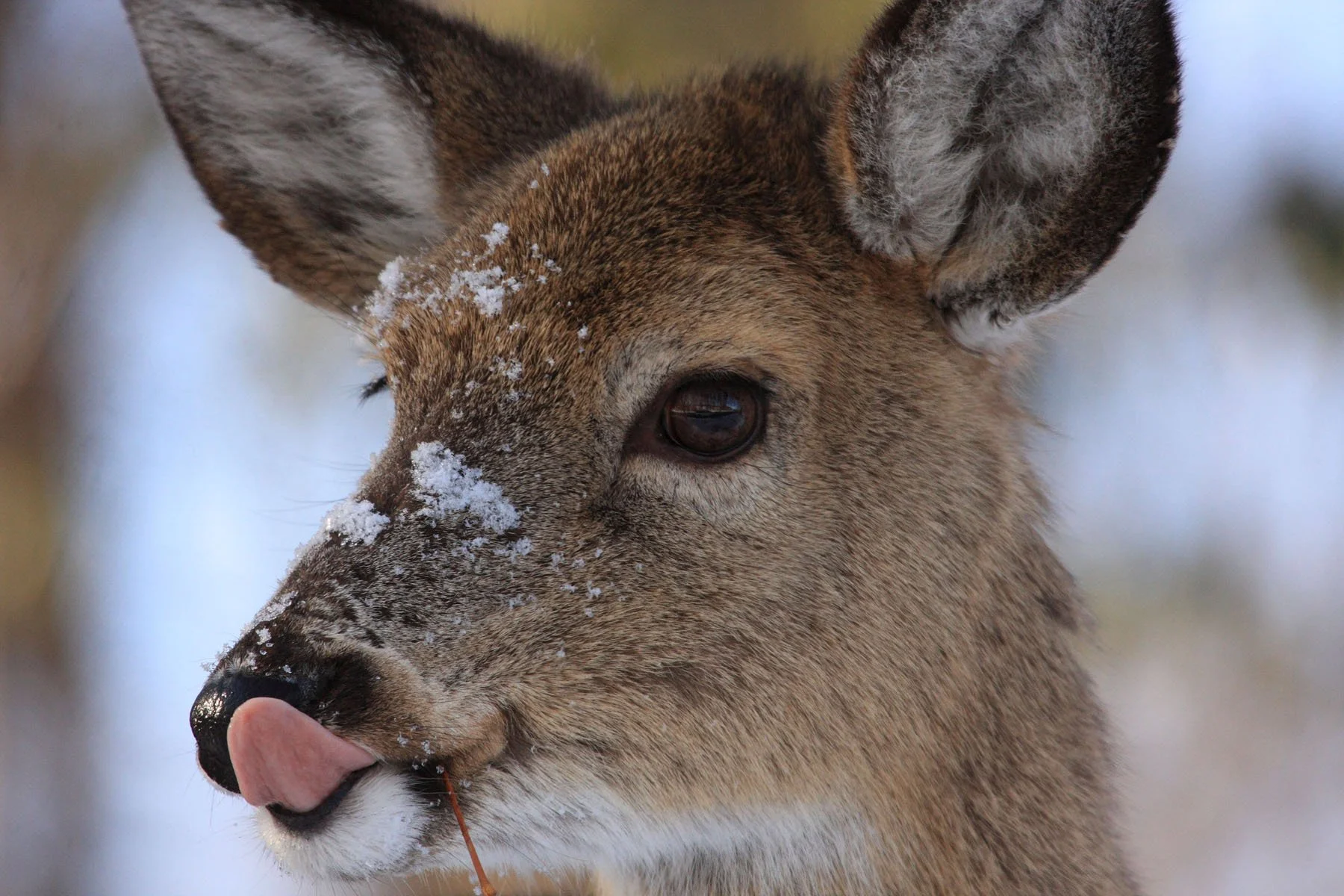
Is this year’s Virginia winter hard for deer? Yes. But don’t make it worse by feeding them.
In response to questions, the Nature Foundation at Wintergreen posted this February 3, 2026 notice from the Virginia Department of Wildlife Resources’ Facebook account.
Winter is the most difficult season for any animal, but the recent ice storm and arctic blast have been particularly harsh.
Fortunately, wildlife evolved to cope with these stressful conditions. For example, deer replace thin summer hair with thick winter coats of hollow, insulating hair to keep warm and dry. In winter, both the amount and quality of food are limited, no matter the weather.
To compensate, deer accumulate as much fat as possible in the fall creating energy reserves, and they reduce their metabolism during the cold winter months. Acorns, which were abundant this past fall, are the primary source for building up fat.
Many well-intentioned people desire to feed deer during these harsh times, but it’s important to refrain from doing so because it can cause tremendous harm. A deer’s stomach relies on certain types of bacteria to help digest their food.
To make digestion more efficient, the environment within the stomach adjusts to the types of foods that are prominent at the time. A deer’s stomach during the winter is not equipped to digest foods like grains (corn), and suddenly consuming large amounts of corn or similar foods can cause acidosis and death in deer.
Deer are incredibly resilient animals, with solid populations living in climates from South Texas to Maine. Is this year’s Virginia winter hard for deer? Yes. But don’t make it worse by feeding them.
Photo above: U. S. Fish and Wildlife Service - Northeast Region
