
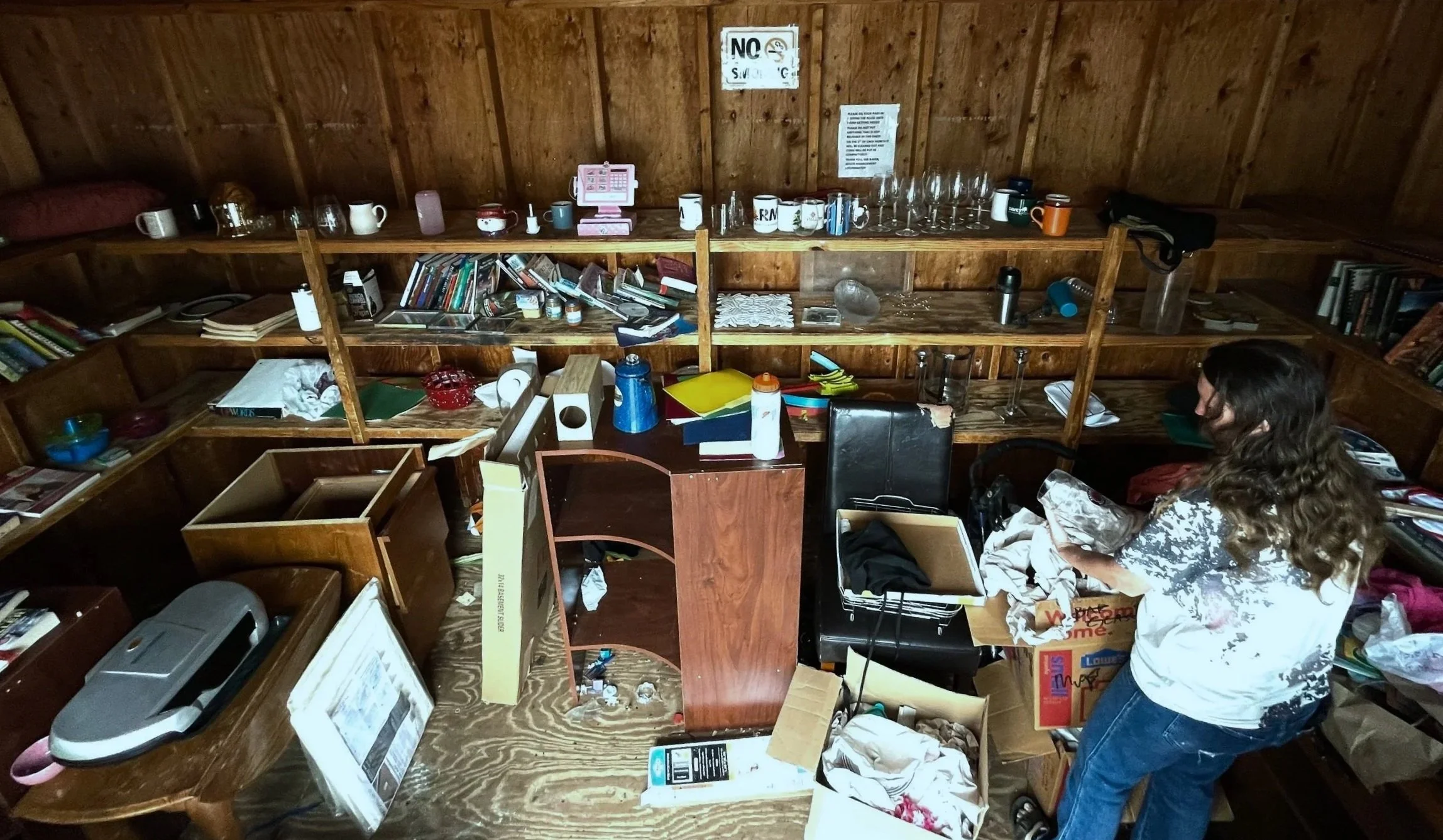
The “share shed” at the Rockfish trash and recycling center is the smallest & busiest of Nelson County’s reuse operations. It has been in operation since 2007.
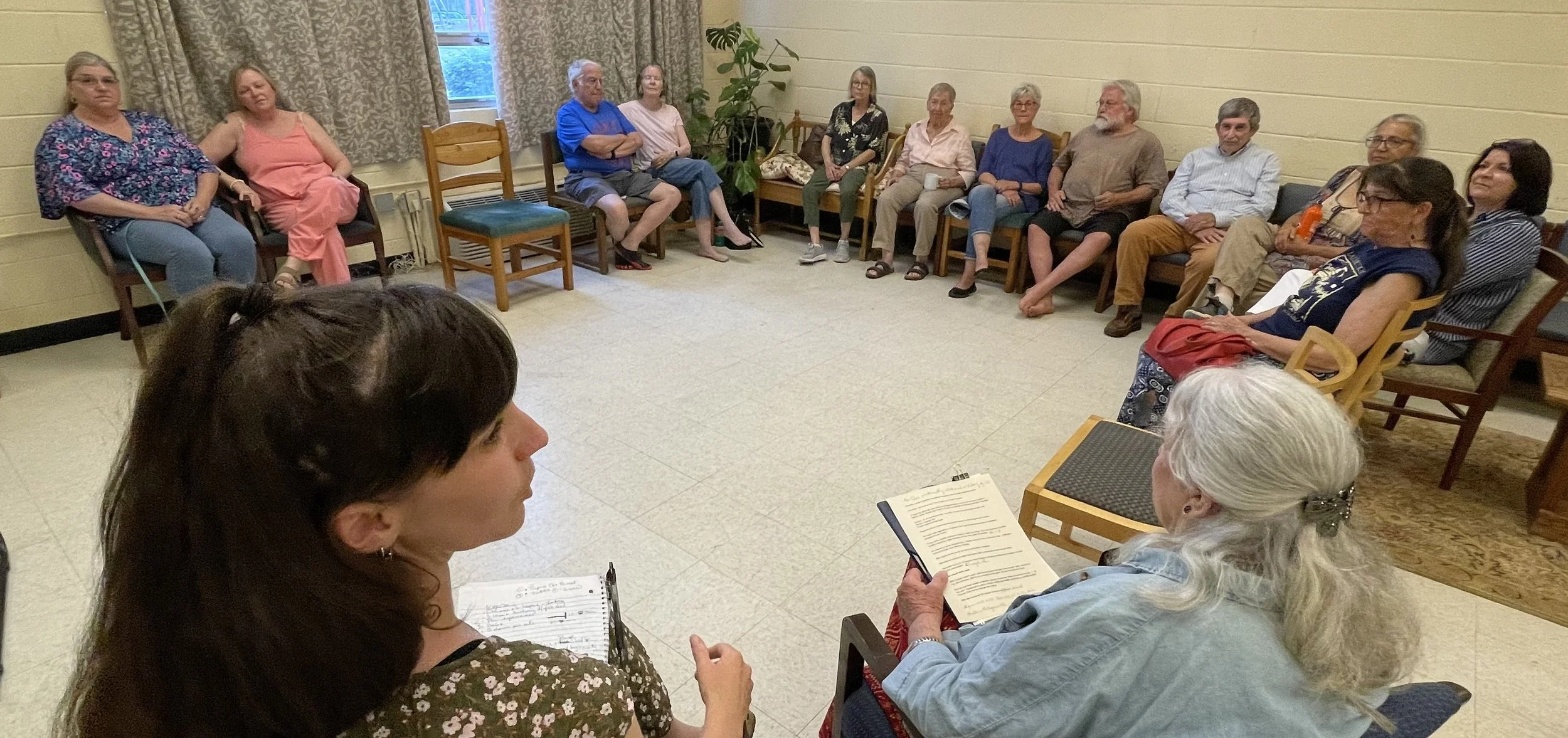
The Friends of Nelson “Community Conversation” on May 20 had about 17 people come out to talk about the reuse shed. The evening program was held at the Rockfish Valley Community Center. See the announcement of the program here.
At the public meeting on the reuse shed on May 20, the WBB asked if the reuse shed at the county’s Rockfish trash and recycling center was in danger of being shut down.
The consensus answer was “no, not at this time.” But there are concerns.
That answer could be taken seriously since Nelson County Administrator Candy McGarry, along with Susan McSwain, were at the meeting of concerned citizens brought together by the Friends of Nelson.
McSwain is a bona fide expert on everything related to trash and recycling in Nelson County and beyond, having been directly involved in creating much of what Nelson County now has in place. She was a leader in getting the state to recognize that reuse is important, more worthwhile than recycling in some ways, in that it can be cheaper to administer and no less environmentally sound.
Everyone at the meeting raised their hand when asked who used the reuse shed. No one at the meeting wanted to see it shut down. Several people talked of finding “wonderful things” at the shed. It was also called “important,” “useful,” and “a delight.”
At the same time, everyone seemed to agree that there were issues that needed to be addressed.
The leave-any-good-stuff, take-what-you-want approach gives any share-shed an impromptu, relaxed, and unstructured vibe that makes rulemaking difficult and the enforcement of any rules awkward. No one at the meeting suggested otherwise.
One problem is that too many donations to the reuse shed are unusable and should go in the trash. Another is people who take items but don’t take the bag or box it came in, which trashes the shed. Others thoughtlessly disassemble items during their search, then leave them in a pile when they're unwanted.
“It’s a useful resource, but the share shed gets trashed too often. Somehow this needs to be addressed,” Henri Weems and others said at the meeting.
Another said that when the shed gets full of trash, people become more disrespectful; that trash begets more trash. The site’s staff and others who have tried to encourage more care and civility have found it awkward or worse.
Harvesting the “free good stuff” brought to the reuse sheds is a source of income for some, entertainment for others, according to many at the meeting on May 20.
“Some put a lot of time and energy into it, it’s like a game show. They will fill up their car. There is a line of contestants waiting for the next car. It can be a carnival,” one long-time Nellysford observer said.
“If someone takes something for free from the reuse shed and sells it at a yard sale, I don’t have an issue with that,” another person said at the meeting.
The county’s sheriff's department has been helpful over the years, going so far as to send warning letters to those who were abusing the reuse shed, McSwain said in response to concerns about misuse by “the same people.”
-Charles Batchelor
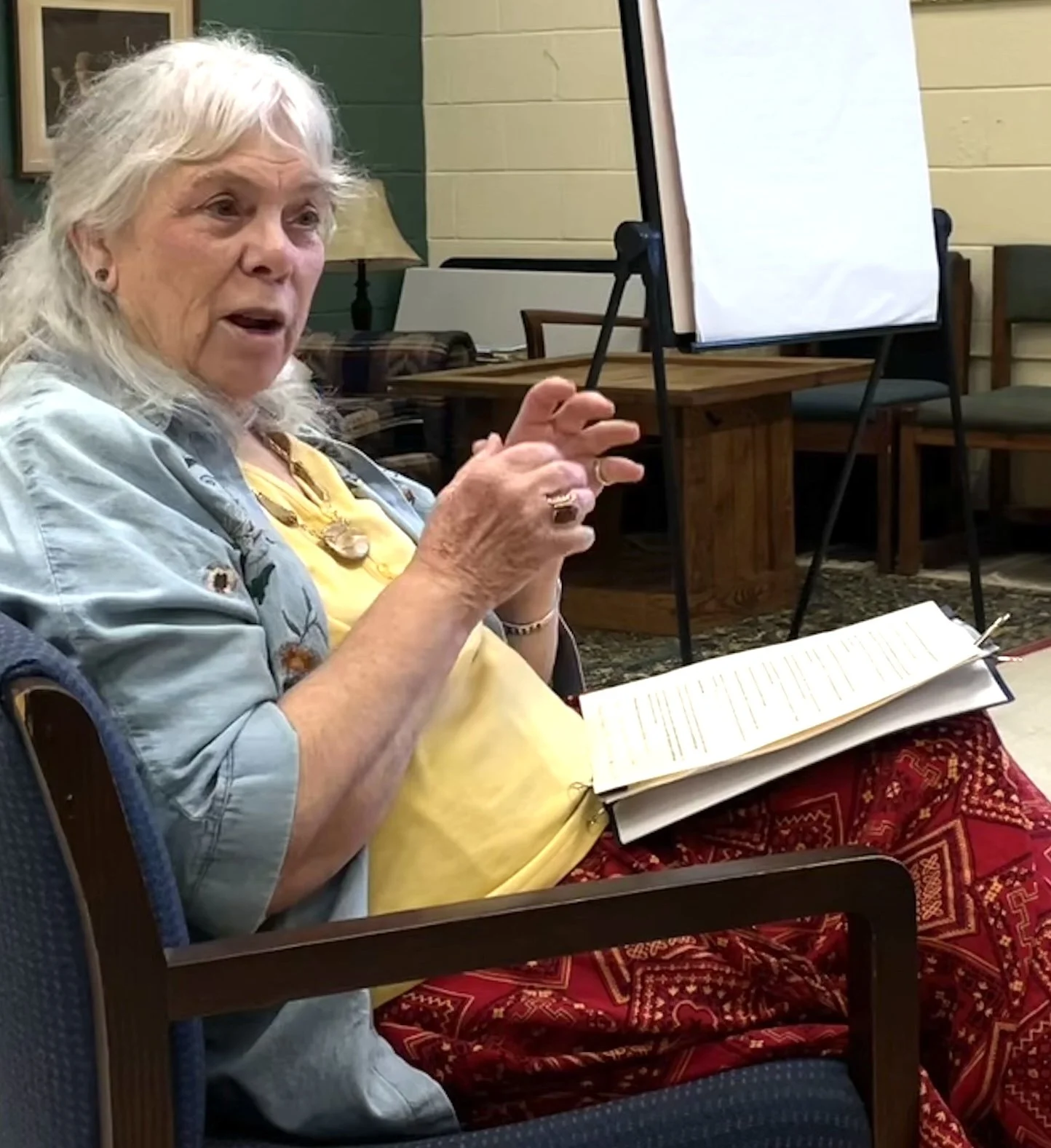
Susan McSwain worked as Nelson County's solid waste and recycling coordinator in the early 2000s and continues to be an advocate for responsible recycling.
“Rockfish is the busiest collection center in Nelson, handling double the amount of residential garbage and recycling of even the second busiest center,” McSwain said in her follow-up report to Friends of Nelson.
“It is difficult for attendants to keep up with everything going on at Rockfish, including abuses at the Re-Use Shed. However, the county has recently made significant inroads to solve problems caused by just a few people.
“The sheriff is cooperating with the county and is notifying offenders that if they continue to cause problems at the Re-Use Shed, they will be banned from using all of the county collection centers. Years ago, this type of warning led to one person being banned, so warning letters carry weight.”
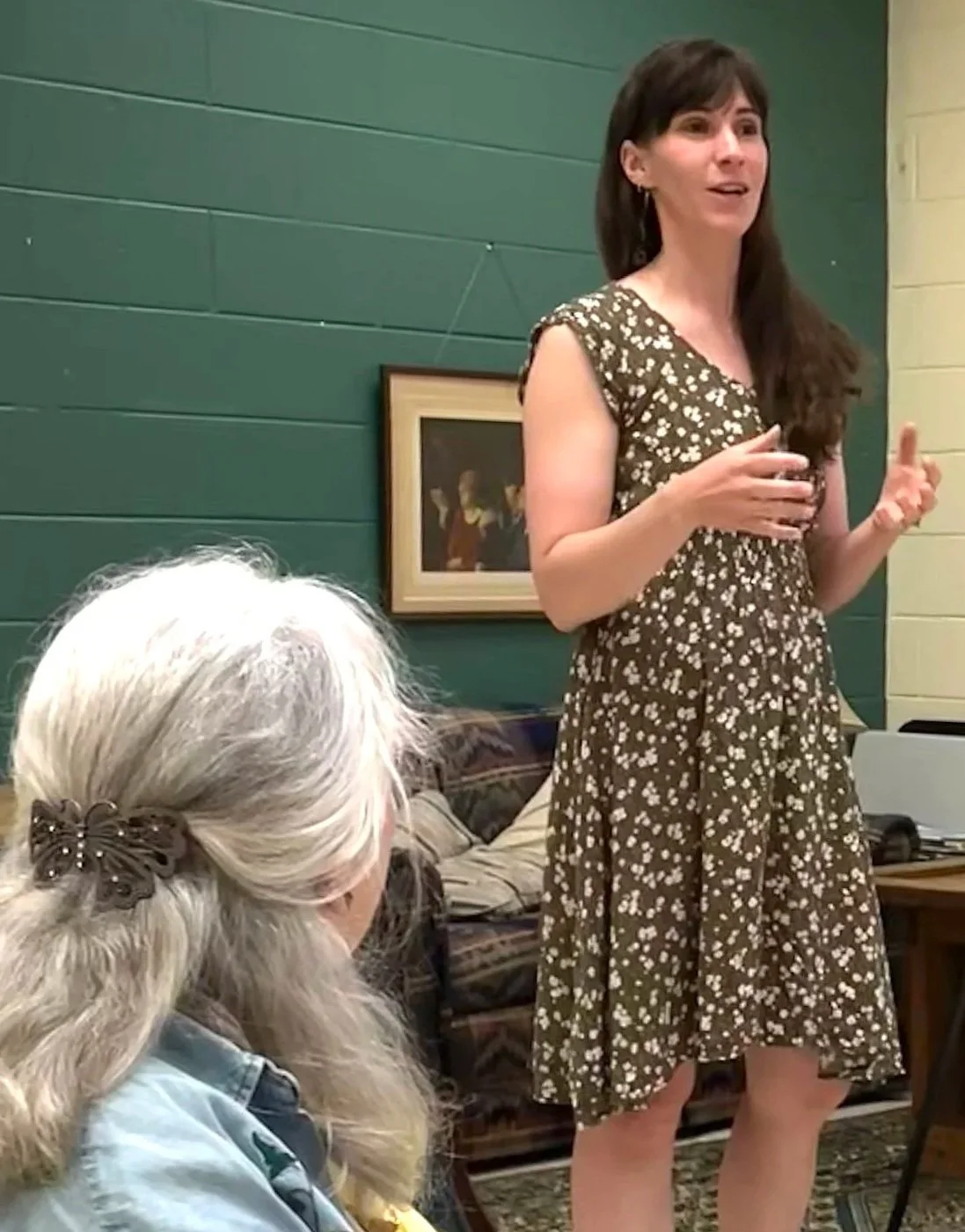
Allison Steele, a board member of Friends of Nelson, served as moderator. The community group wants to hear from people interested in improving the management of the reuse shed. Call 434-260-3298 or email friendsofnelson@gmail.com.
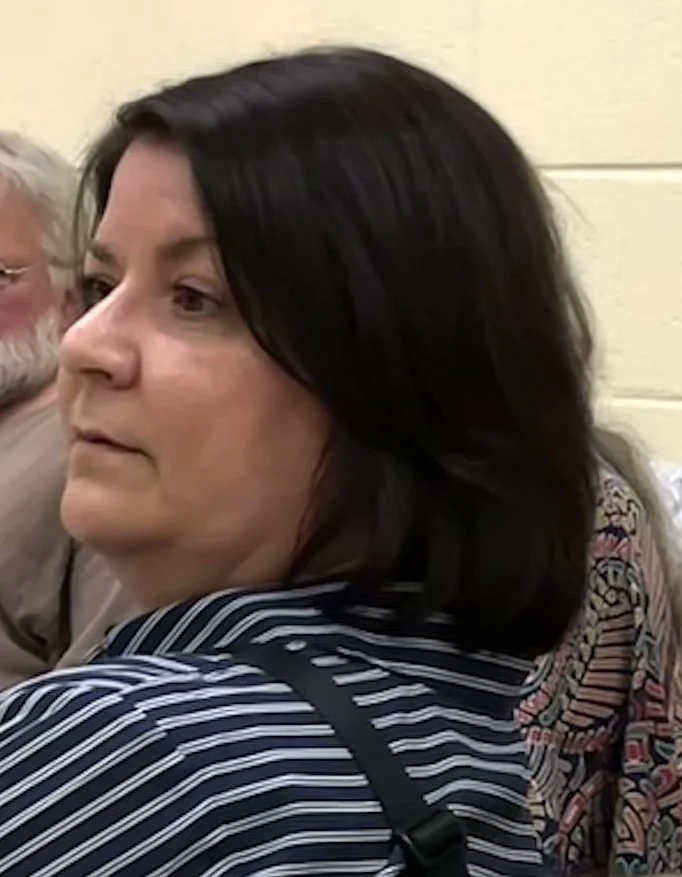
Nelson County Administrator Candy McGarry listened and took notes at the reuse shed meeting.
Friends of Nelson emailed this summary of the discussion to those who attended the May 20 meeting:
Strengthen enforcement and rules: Publicize and consistently enforce limits (e.g., one visit/day rules, banned items), use warning letters and bans for repeat offenders; coordinate with Sheriff for rapid response. If you see an offense, you can call the non-emergency sheriff’s number, or the county administrator’s office.
Support attendant leadership roles and training: Standardize conflict-avoidance protocols, reporting procedures (license plates, photos), and routine site maintenance expectations.
An idea to expand public education: Relaunch an “Out of Sight, Out of Mind” newsletter or targeted on-site handouts at Rockfish; use volunteers to distribute brief, educational guidance to visitors. Include a poster at each site encouraging users to engage in brief cleanup each time they use the shed. There may be county funding available to implement this.
Operational adjustments: The county has made changes to the parking/flow at the re-use shed by asking folks to park in the main lot and walk down to the shed to deter drive-up dumping and loitering. A suggestion was made to increase staffing/attendant coverage during peak hours including consistent enforcement by staff to enforce this. Making exceptions for elderly or disabled folks dropping off.
Community stewardship: Encourage users to “leave it neater than you found it” and recruit volunteer shifts for periodic cleanup and informal monitoring; give the sheds a “makeover” to help encourage consistent cleanliness and respect; maintain a bulletin board for “Wanted/Offered” items to promote reuse of larger items without outdoor exposure.
In conclusion, the staffed collection center model has substantially improved waste management and reuse in Nelson County while reducing hauling costs. Sustaining the Re-Use Sheds and collection centers will require clear enforcement, consistent training, targeted education, modest operational changes at busy sites, and continued community engagement.
